

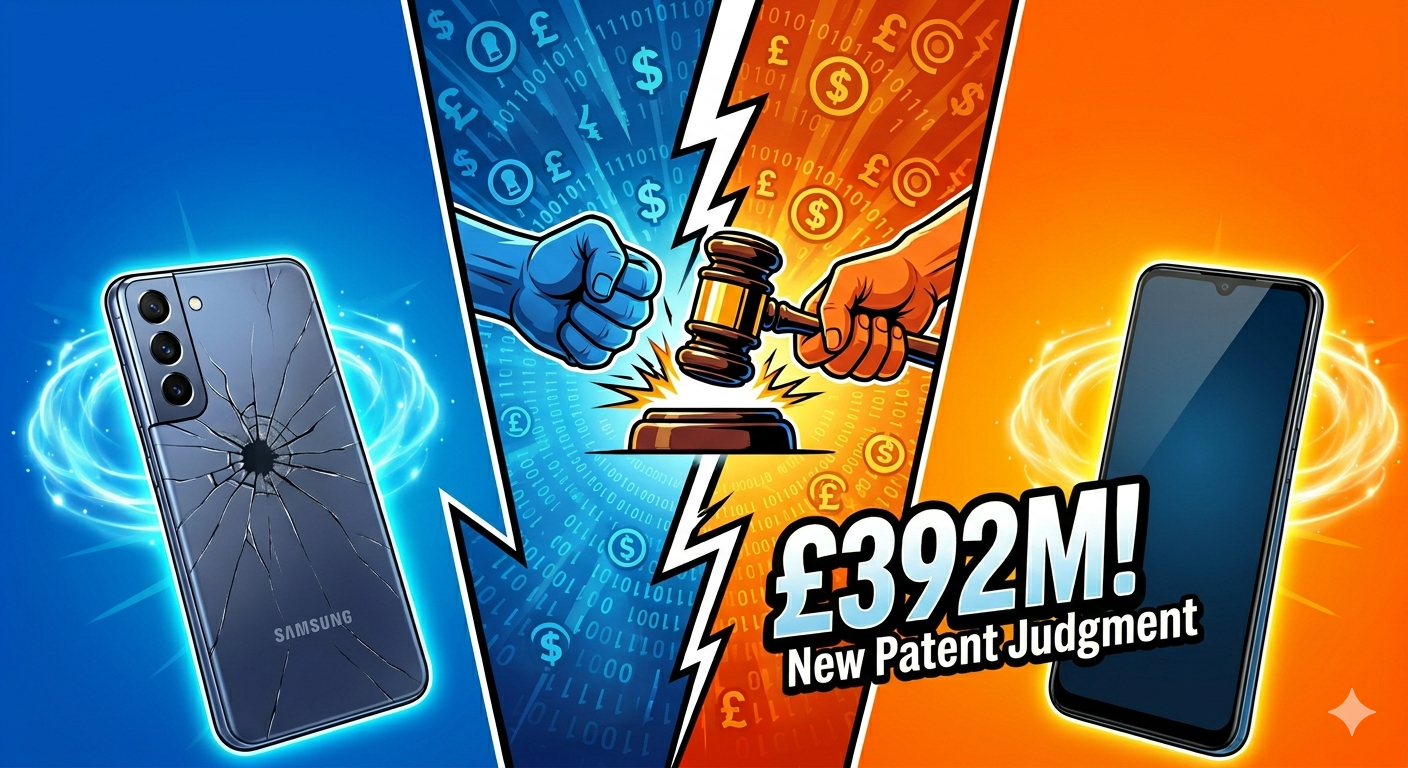
On 1st May 2026, the Patents Court set a $392m FRAND lump sum in Samsung v ZTE, reinforcing London’s role in global telecoms patent disputes.
The Patents Court has handed down judgment in Samsung v ZTE, a dispute over global FRAND terms for a portfolio cross-licence. FRAND means fair, reasonable and non-discriminatory. In telecoms, companies often own patents needed to use shared standards such as 4G and 5G. Those patents can give enormous leverage so courts may have to decide what a fair licence should cost when parties cannot agree.
Mr Justice Meade determined a FRAND lump sum balancing payment of US$392 million for a court-determined licence. Samsung’s primary position was no more than US$200 million. ZTE’s position was US$731 million. The court landed closer to Samsung, after examining comparable licences and rejecting parts of ZTE’s approach to valuation.
FRAND litigation is partly legal dispute and partly commercial negotiations under pressure. A company selling phones, network equipment or connected technology needs access to standards. A patent owner needs payment for inventions built into those standards so when negotiations fail, injunction risk and global litigation can turn a pricing argument into a board-level problem.
The English courts remains a serious forum for these fights. It can set global FRAND terms even where the patents and sales are worldwide, provided the litigation is properly anchored. That gives London influence beyond the UK market which means, quite excitingly, a domestic court decision can shape settlement strategy in China, Brazil, Germany, the United States and other patent battlegrounds.
The press summary shows widespread litigation between the parties and a dispute over how comparable licences should be used. Comparable licences are previous deals used to estimate fair value. It sounds simple but each deal has its own pressure points, patents, bargaining context and commercial side terms. The court’s job is to separate useful comparables from deals that may be distorted by leverage.
And it doesn’t stop there! The judge has directed a hearing on the form of confidentiality issues. FRAND judgments often rely on commercially sensitive licence data. Patent law likes transparency. Business likes its prices kept out of rival hands. Time for permission to appeal will not start until that hearing.
The ruling is important for companies outside the immediate telecoms sector as connected cars, smart devices and industrial technology increasingly rely on wireless standards. Businesses using standardised technology may find themselves pulled into patent licensing structures they did not design and barely understand. FRAND disputes are becoming part of the cost of selling connected products. That makes early patent mapping and licensing advice less of a luxury and more of a defence against surprises.
For technology lawyers, Samsung v ZTE is another reason to watch the Patents Court closely. For clients, it shows why licence negotiations must be documented, evidence-based and commercially realistic. A bad pricing case can survive for years, then meet a judge with a calculator. The companies using the standards are often several steps removed from the patent negotiations which set the price.
Leave a Reply