

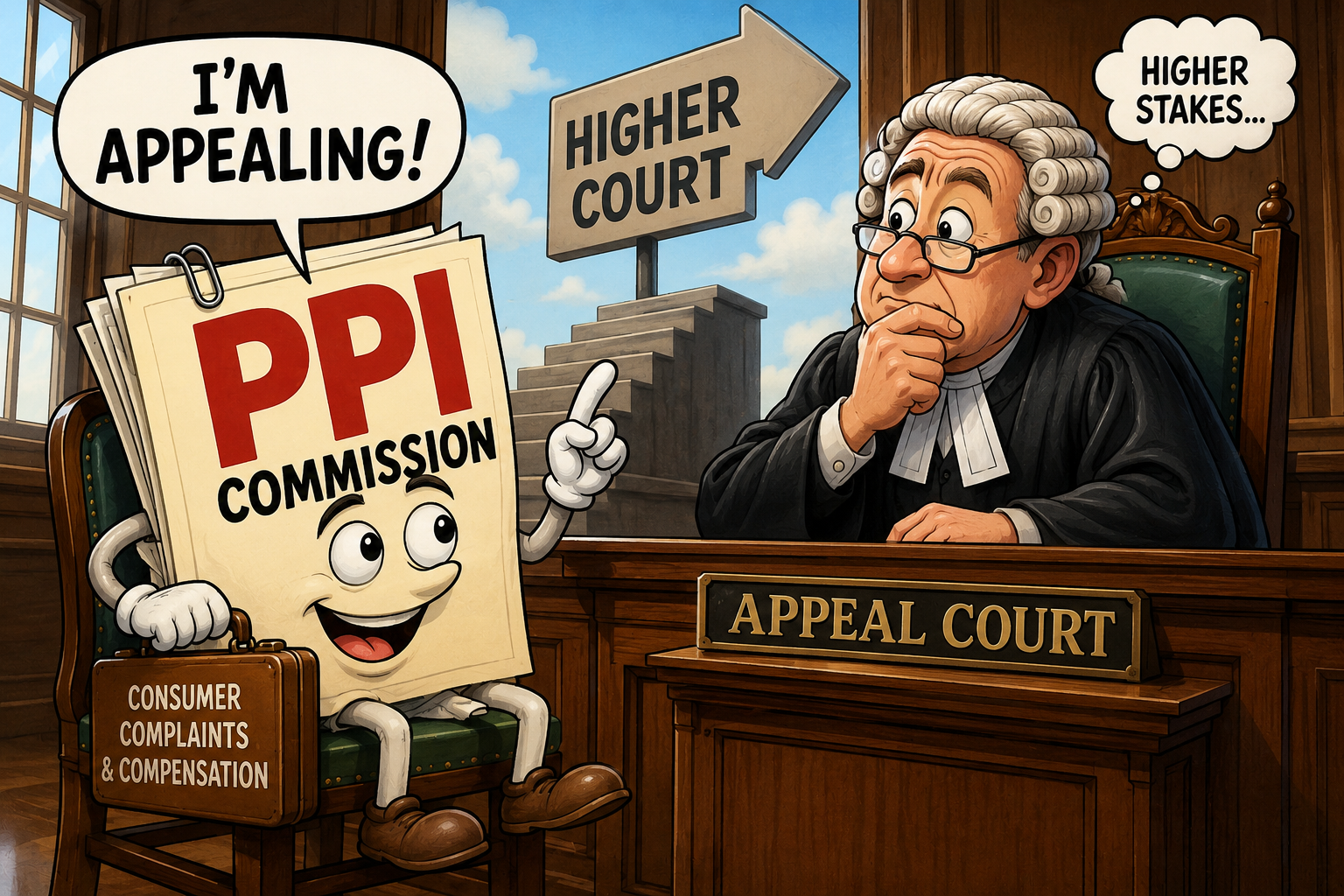
A £2,750 dispute can cast a long legal shadow when the words around it are PPI, commission and unfairness.
The Court of Appeal is hearing Orton v Barclays Bank UK Plc, trading as Barclaycard, on 8 July. The appeal concerns a county court order made in March 2025. The claimant says he was treated unfairly because the bank did not tell him about commission it received in connection with a payment protection insurance policy.
That may sound like history wearing a claims-form badge. PPI was supposed to be the scandal that ended: the consumer redress beast that finally crawled back into the sea. It has not quite gone. It is still there in the undergrowth, moving through arguments about unfair relationships, limitation periods and what lenders had to say about commission.
Financial services litigation has a long tail. Less dog, more fox. You glimpse it at the edge of the treeline, then find its tracks all over the next appeal list.
The plain-English legal point is this. A borrower can argue that the relationship with a lender was unfair because important information was hidden, softened or not properly explained. Commission can matter because it may show the sale was not as clean as the customer thought. Advice, paperwork and product design can look neutral while money is quietly flowing through the roots.
The court then asks two questions. Was the relationship unfair? If it was, what should be done about it? That remedy might mean money back, interest, a revised balance or another order designed to put the consumer closer to where they should have been.
Small cases matter because they test whether the law is usable. Most consumers do not arrive with seven-figure claims, litigation funders and folders labelled “strategy”. They bring disputes for sums that matter to rent, food, repairs, school shoes and credit-card balances. A £2,750 claim is not small if it is your money.
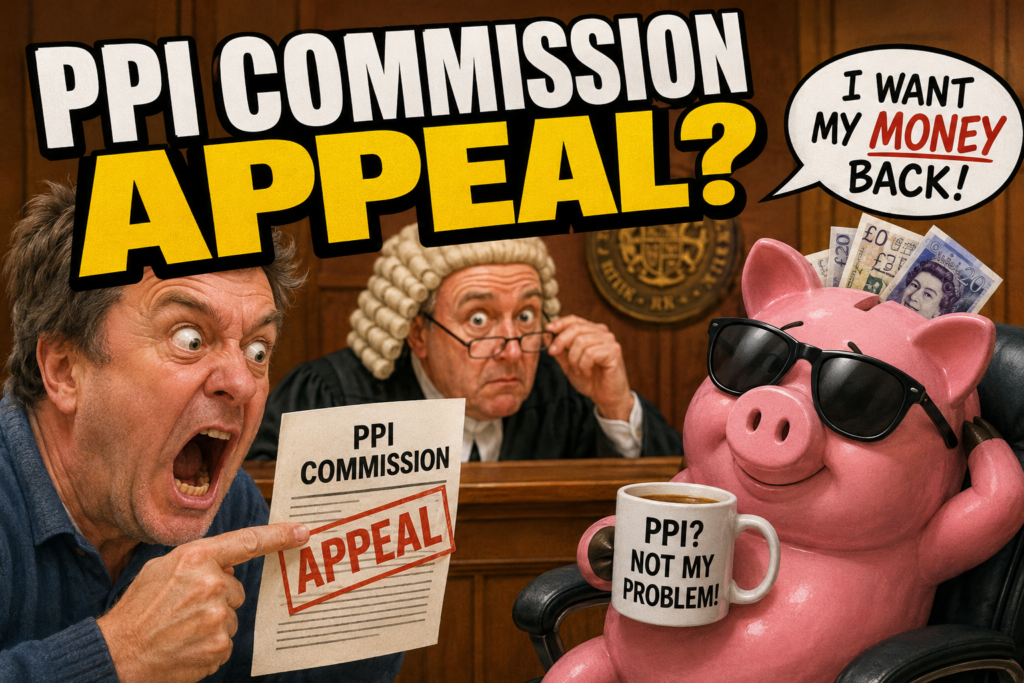
The problem is that modest claims can grow thickets of difficult law. Consumer credit, disclosure, limitation and unfair relationships are not exactly picnic material. If ordinary people cannot realistically bring those claims, rights become decorative. Attractive, framed, and mostly useless.
For banks, the attraction of fighting a small case on a point of law is obvious. A small defeat can seed many more claims. A small win can cut back a whole line of argument before it spreads. Financial institutions think in portfolios. Consumers think in bills. The court has to translate both without pretending they are the same language.
The appeal also sits beside the wider motor finance redress war. The products are different, but the pattern is familiar: commission, disclosure, mass consumer harm, limitation and professional representatives building claims at scale. Consumer credit law keeps teaching the same lesson. If incentives are buried inside polite paperwork, they have a habit of pushing up through the soil later.
For claimant firms, PPI remains both warning and business model. For defendant firms, it remains an exercise in containment. For the courts, it is proof that yesterday’s sales scripts can keep producing tomorrow’s listings.
The Court of Appeal may decide a narrow point in one modest dispute. The legal market will read it as a signal about how much life remains in commission-based consumer claims.
County court decisions do not always stay in the clearing where they started. A small claim can climb into appellate law because the principle travels beyond the parties. That is why banks defend. It is why claimant representatives watch.
The number on the claim form is not always the value of the thing growing beneath it.
Author: Sophie Greatbanks
Leave a Reply