

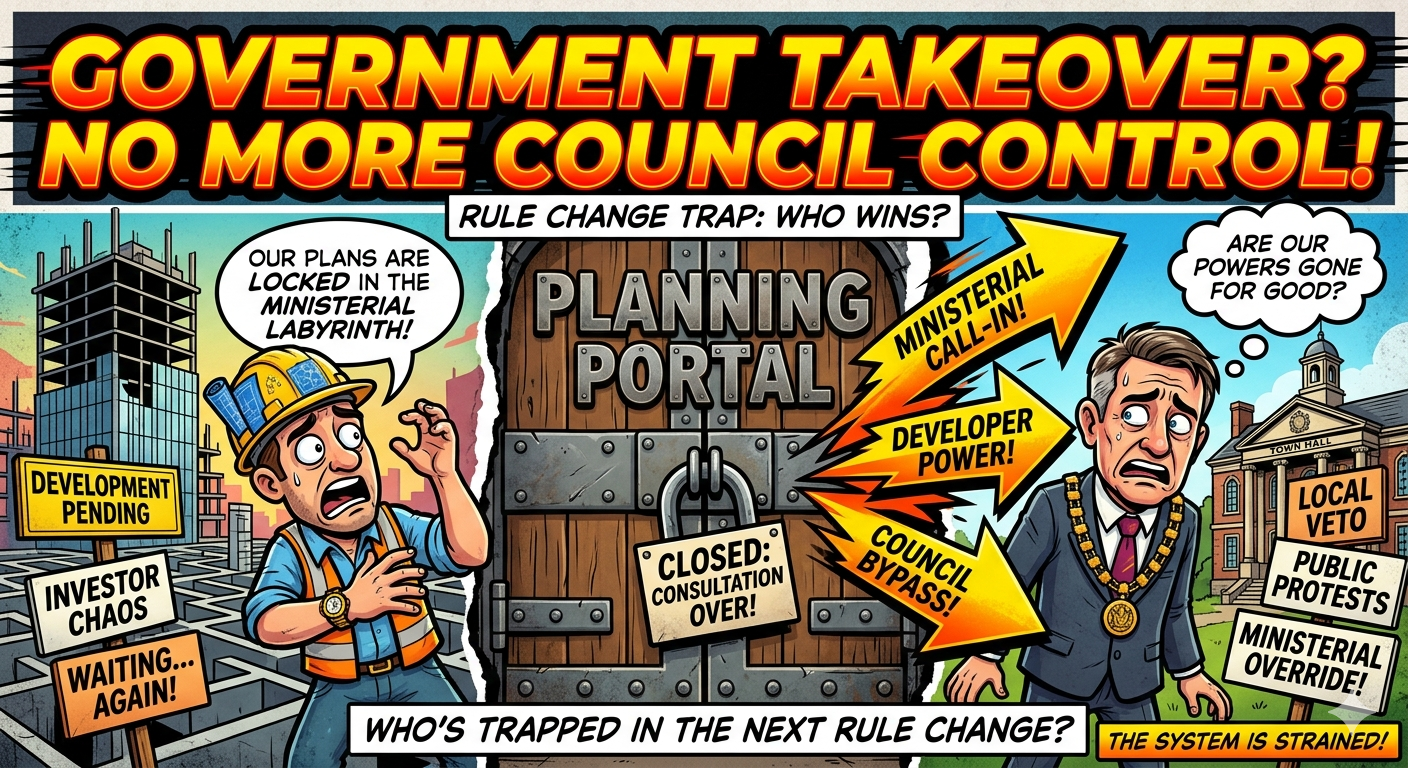
The government’s consultation on planning referrals has closed, leaving developers, councils and objectors watching for changes to call-in rules.
A consultation on when local planning decisions should be sent to ministers has closed, leaving developers and councils waiting for the next rule change in an already strained system.
The Ministry of Housing, Communities and Local Government consultation on consulting the Secretary of State on planning decisions closed on 4 May 2026. The exercise looked at rules requiring certain planning applications to be referred to central government before a local authority can grant permission meaning call-in rules decide when Whitehall gets a chance to intervene in decisions usually made locally.
The obvious concern with adding this new red tape is that decisions to refer a case can slow projects and increase costs or a decision not to refer can leave opponents arguing the wrong body made the final call. For developers, delay can turn a viable project into a funding problem. For residents, referral may be the only visible route to wider scrutiny.
The consultation is part of a bigger push to speed up the delivery of housing. Ministers want growth and more homes. Councils want control, or at least enough staff to process applications without being blamed for national shortages and objectors want environmental and community concerns heard before permission becomes concrete.
Call-in powers have always carried political heat because they blur local and national control. A major housing scheme, energy project or large commercial development can be both locally unpopular and nationally supported. The Secretary of State’s role allows central government to step in where wider policy interests are engaged, but if referral rules are unclear, parties litigate the process instead of getting to the merits.
For planning lawyers, clients will want to know whether schemes in sensitive categories should be paused, pushed or redesigned. Councils will need to check whether committee reports and officer recommendations reflect any new referral triggers. Claimants considering judicial review will look closely at whether consultation responses expose weaknesses in the final policy.
The consultation may also feed directly into litigation risk. Claimants challenging a planning permission often look for procedural flaws before attacking planning judgment. Developers may therefore welcome clearer thresholds even if the thresholds catch more schemes, because uncertainty is usually more expensive than a strict rule everyone can see. Local authorities will want the same clarity before committees face another round of contested reports.
The government now has to choose between speed and scrutiny without pretending they always point in the same direction. Planning reform rarely dies from lack of ambition. It more often dies in the gap between a ministerial target and a council inbox.
Leave a Reply