

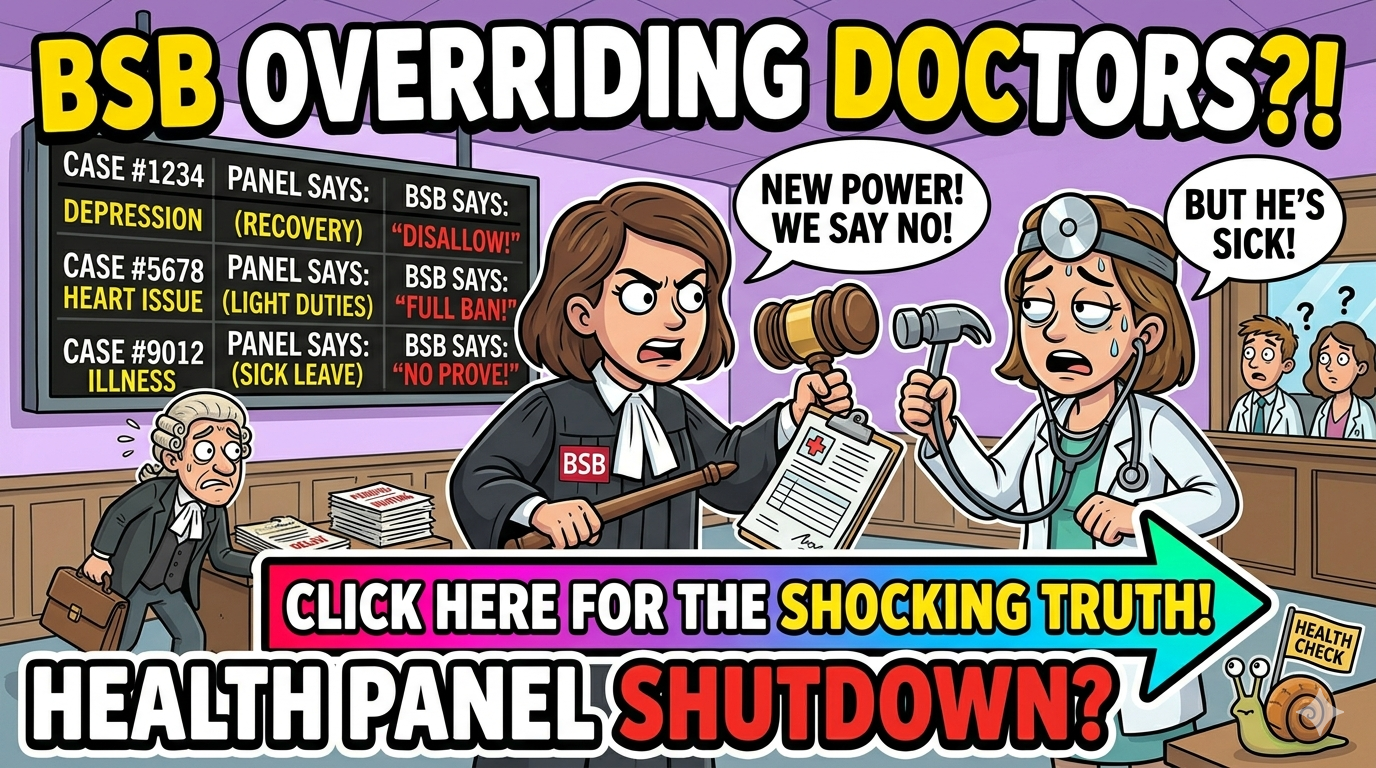
The Bar Standards Board wants a new power to challenge health panel decisions.
Health panels deal with barristers whose ability to practise may be affected by illness or a medical condition. The BSB wants the power to appeal those decisions where it believes a panel has got the outcome wrong. This is not about punishing barristers for being unwell. It is about making sure clients, courts and the public are protected where a health issue may affect safe practice.
A health case is not the same as a disciplinary case. Discipline asks whether a barrister broke the rules. A health case asks whether the barrister can practise safely. The outcome may involve treatment, monitoring, limits on practice or, in serious cases, being removed from practice for a period.
If a panel imposes weak restrictions in a risky case, the regulator may have little room to respond. If a panel goes too far, the barrister also needs a fair way to challenge it. A sensible appeal system should protect both sides. Clients who need safe advocacy, and barristers who should not lose work or reputation without a proper basis.
This all comes at a difficult time for the BSB. The BSB has faced criticism over delay, enforcement and confidence in its systems. Health cases are especially sensitive because they involve medical privacy as well as client protection. A regulator which cannot correct a flawed decision in that space risks looking weak when it needs to look careful and firm.
However, more appeal rights can make regulation slower, more expensive and more legalistic. Barristers already complain about long investigations. A system with too many routes can become a fight about process while the original concern gets buried in paperwork. The BSB will need to show the power is narrow and targeted, not a second attempt at every difficult case.
For clients, this will not feel urgent unless something goes wrong. Most people assume their advocate is fit, insured, competent and properly supervised. They only discover the regulatory structure when a case falls apart or a lawyer fails them.
These cases test whether the profession can separate compassion from risk. A barrister may need treatment, supervision, a phased return or temporary limits on practice. Clients still need safe representation. So whilst an appeal power would not fix all complaints with Bar regulation, it would at least, give the regulator one more way to deal with a serious decision which has gone wrong.
Author: TOF
Leave a Reply