

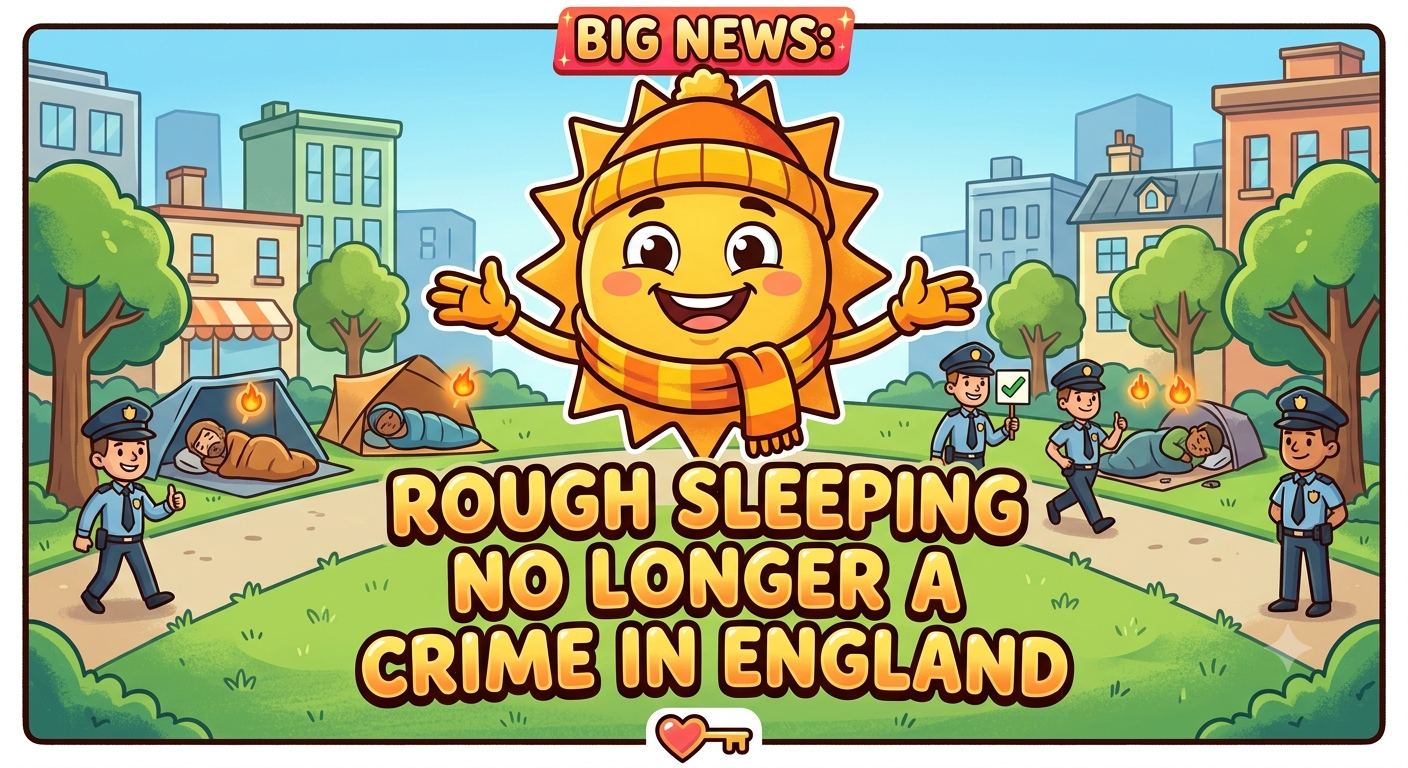
The Vagrancy Act was law written in the tone of a man irritated that poverty had chosen to be visible.
On 29 June, the government repeals the remaining 1824 provisions which criminalised rough sleeping and begging. That ends a 202-year legal oddity: a statute old enough to smell faintly of damp wool and empire, still sitting on the books as permission to treat homelessness as misbehaviour.
Ministers say the repeal marks a shift from punishment to prevention. Homelessness support will sit within a wider national plan backed by £3.6bn over three years. Good. Money is useful. So is changing the law. The test is whether either reaches the pavement before winter does.
So sleeping rough will no longer be a criminal offence in itself. Begging will no longer be treated through a law designed before the police had cars, radios or much interest in social work. Police and councils will still have powers to deal with organised begging, exploitation, harassment, nuisance and criminal trespass under newer legislation.
A person bedding down in a doorway is not the same legal problem as a gang forcing vulnerable people to beg. The Vagrancy Act blurred that line with the confidence of bad old law. The new framework has to hold it clearly.
For housing lawyers, charities and outreach teams, repeal is overdue rather than revolutionary. The Act survived because it became familiar. Familiarity is not a defence. Plenty of shabby things survive because institutions forget to be embarrassed by them.
Its use had declined, but that does not make it harmless. A power need not be used every day to change behaviour. If rough sleepers know they can be moved on, fined or treated as offenders, the law has already done some of its work. It has made the person smaller and the problem tidier. Tidy problems are very popular in public administration. Solved problems are harder.
Repeal removes a punitive label. It does not create homes. It does not conjure mental health support, reopen hostels, fix addiction services, rebuild family ties or make local housing markets less deranged. Nobody should pretend a repeal notice is a bed.
The practical work now falls to councils, police forces and homelessness services. Local policies will need updating. Frontline staff will need training. Officers will need to know when enforcement powers still apply and when the right answer is referral, outreach or safeguarding. The law is changing. The habit has to change too.
There is a criminal justice point as well. The old law could leave people with fines or records when they were least able to carry either. Criminalising visible poverty is administratively neat and morally grubby. It can push people away from help because contact with authority begins to look like the first step toward punishment.
The best version of this reform is modest and humane. It says the street is evidence of a housing failure, not a dock. The worst version is ceremonial: repeal with no beds behind it, compassion with a press office, policy wearing a clean shirt.
Nobody sensible wants police left powerless against organised exploitation. Nobody serious thinks begging gangs should be ignored because the Vagrancy Act was cruel. The repeal does not require naivety. It requires accuracy.
A 202-year-old law is leaving the stage. It should not be replaced by a shrug in newer language.
Author: Thomas Greatbanks
Leave a Reply