

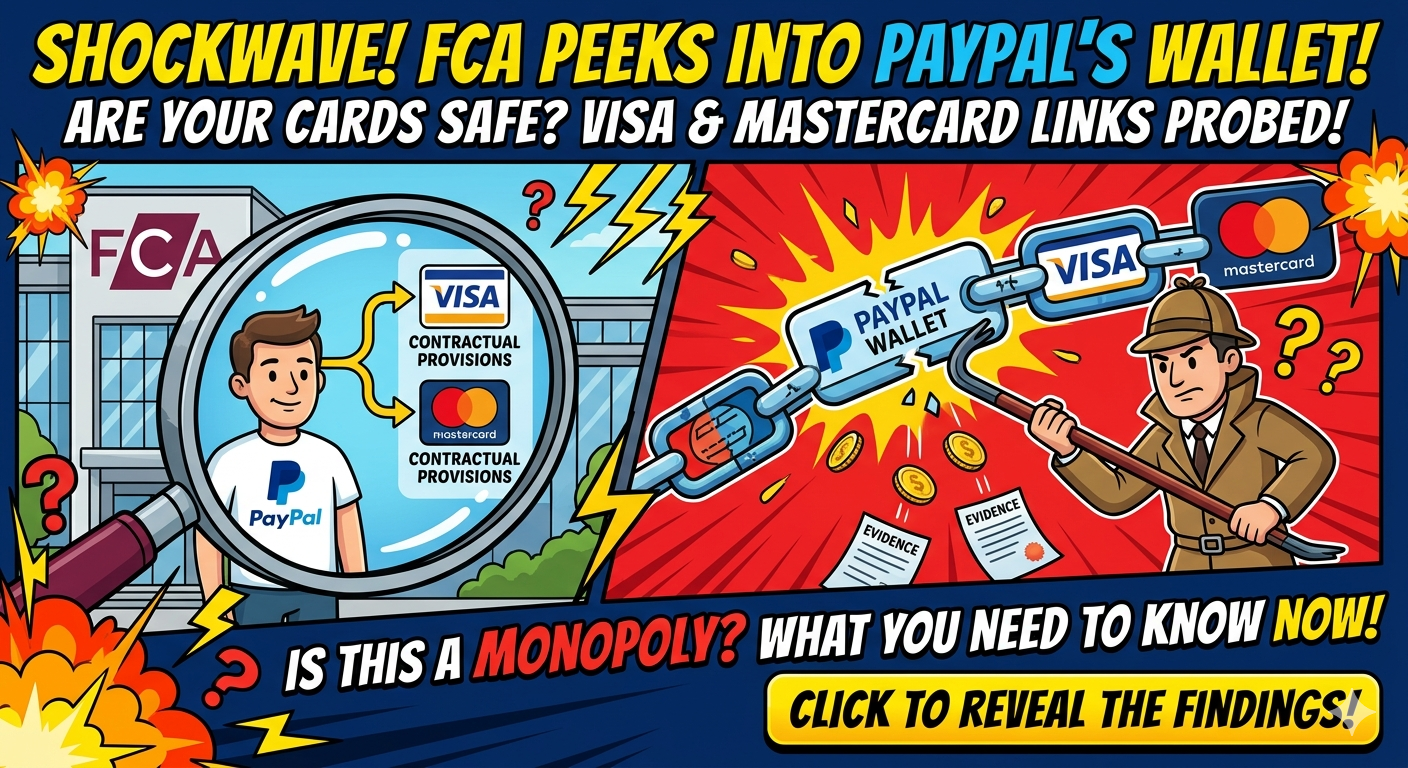
The FCA has put Mastercard, Visa and PayPal under formal competition scrutiny over the way PayPal’s digital wallet is funded and used.
The FCA confirmed on 6 May that it is investigating Mastercard, PayPal and Visa under Chapter I of the Competition Act 1998, and Mastercard and Visa under Chapter II, for suspected anti-competitive conduct linked to PayPal’s digital wallet. Chapter I deals with agreements and practices which may restrict competition. Chapter II deals with abuse of a dominant market position. The FCA has stressed it has made no findings and may decide not to issue a statement of objections.
A digital wallet lets someone pay online or in-store without entering card details each time. Behind that payment sits a chain of card networks, payment processors, merchants, issuing banks and fees. Small changes in who funds the wallet, how payments are routed, or what terms major card networks impose can alter costs across a large slice of digital commerce.
Retailers care about fees and fintechs care about access but consumers care only when price, choice or reliability changes. Competition law steps in where market power or coordination may distort those outcomes.
The investigation also shows the FCA’s competition role becoming more visible. Many people think of the regulator as a financial conduct watchdog, dealing with banks, advisers and consumer protection but it also has powers under the Competition Act in financial services markets. Those powers are separate from its usual enforcement route under the Financial Services and Markets Act. That distinction is key for lawyers advising firms caught by information requests or dawn-raid style evidence gathering!
The companies will have room to argue the commercial logic of their arrangements as not every restrictive term is unlawful. Competition cases turn on evidence of effects and whether the conduct in question can be justified.
For UK law firms, the investigation is a useful reminder that payments work sits across regulatory, competition, data and commercial contracts practice. The best advice will not come from reading a single rule book rather it will instead come from understanding how the money, incentives and technical structures put in place fit together.
If the FCA does issue objections later, this could become one of the sharper digital payments cases in the UK market. For now, the regulator has opened the file and told three global names their wallet arrangements deserve a closer look.
The next stage will decide whether the probe becomes a full infringement case or closes without action. Even at this stage, banks, wallet providers and merchants will be checking their own payment arrangements. A regulator asking questions of this size tends to make the rest of the market read its contracts more carefully.
Author: TOF
Leave a Reply