

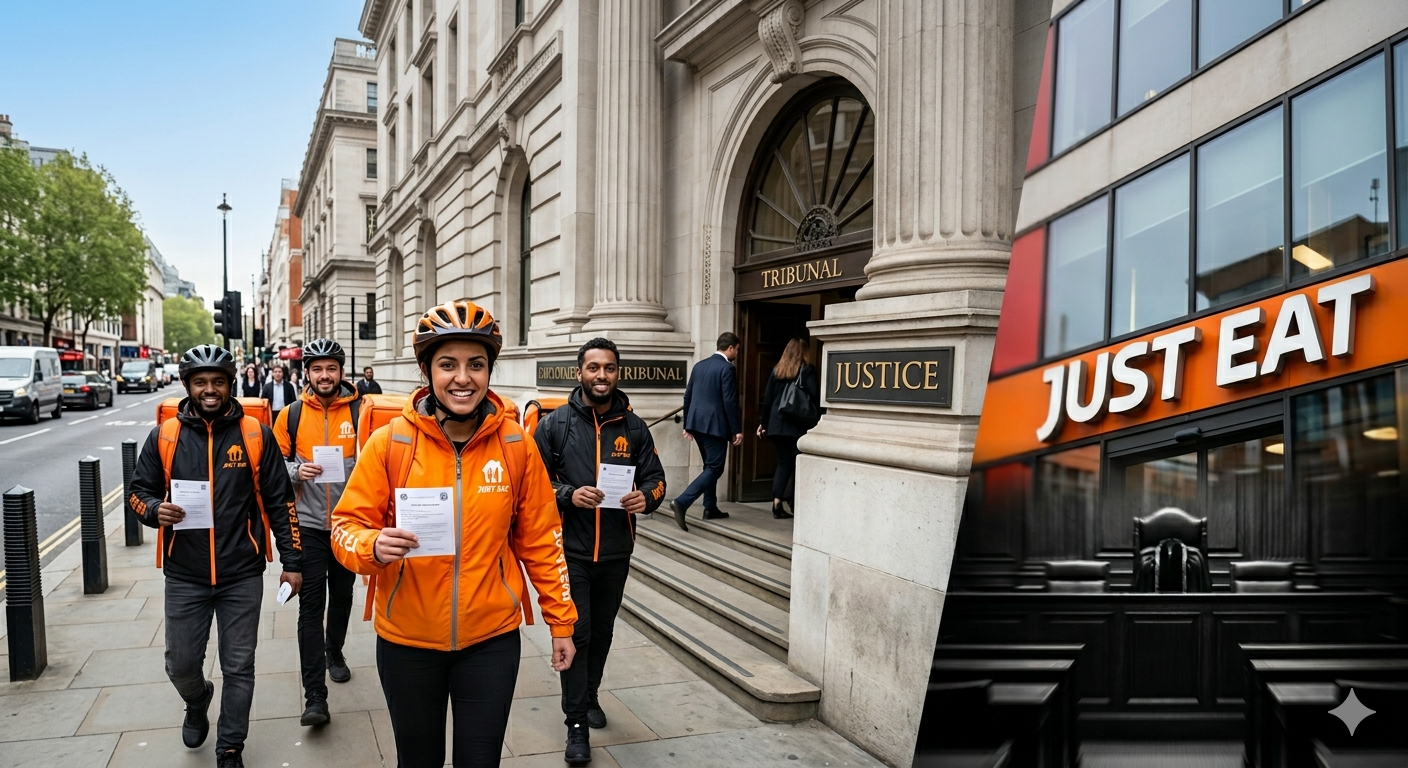
Just Eat is facing a fresh courtroom test of the gig economy model it brought back after dropping guaranteed courier employment.
More than 7,000 couriers have launched legal action seeking worker status, with an employment tribunal hearing starting this week and running into June. Worker status sits between being an employee and being self-employed. It can unlock basic rights such as the minimum wage and paid holiday, while still allowing looser working patterns than a standard job.
The claim goes to the centre of how food delivery platforms make money. If couriers are treated as independent contractors, the platform can scale fast and keep labour costs flexible. If they are workers, the platform must absorb rights which look ordinary in most jobs but expensive when spread across thousands of short, app-managed shifts.
Just Eat once tried a more formal model. Its Scoober system gave couriers pay guarantees and employment-style protections. The company later moved away from it and returned to a self-employed courier model. The tribunal will now examine whether the practical relationship matches the label. Employment law cares less about the wording in an app contract than about control, dependence and how the work happens on the ground.
The case is being watched because platform work has become a test of modern labour law. Courts have already forced changes in parts of the private hire and delivery market. The Supreme Court’s Uber judgment showed employers cannot simply draft away worker rights by calling people independent businesses. Each platform still turns on its own facts, which is why these cases keep coming back.
For couriers, the stakes are immediate. Minimum wage protection matters when waiting time, fuel, insurance and quiet periods eat into earnings. Holiday pay matters because rest is not a luxury item. For platforms, a worker-status ruling can reshape pricing, staffing, investor expectations and future operating models.
The wider legal market will also be paying attention. Group employment claims are now a serious claimant-side business line. They require scale, funding, evidence and patience. They also give law firms a role in turning scattered low-value grievances into a case with market consequences.
Government reform is circling the same question. Ministers have promised stronger enforcement of workplace rights and simpler rules on employment status. A tribunal judgment later this year could land in the middle of that policy debate with better facts than any consultation paper.
The case also lands as ministers and regulators keep describing labour enforcement as a growth issue rather than a niche employment concern. Businesses built on flexible labour have always argued that customers want speed and workers want choice. The tribunal will test whether choice in the app is matched by real bargaining power in the job. A courier who can log off is not automatically running a business. If the claim succeeds, the impact will reach pricing, insurance and investor assumptions.
The delivery app economy sells convenience in minutes. Its legal risks move more slowly, but they tend to arrive with a much larger bill.
Leave a Reply