

The law is often most visible after a serious crime has been committed. Prevention, by contrast, tends to attract less attention, even though it can be just as important.
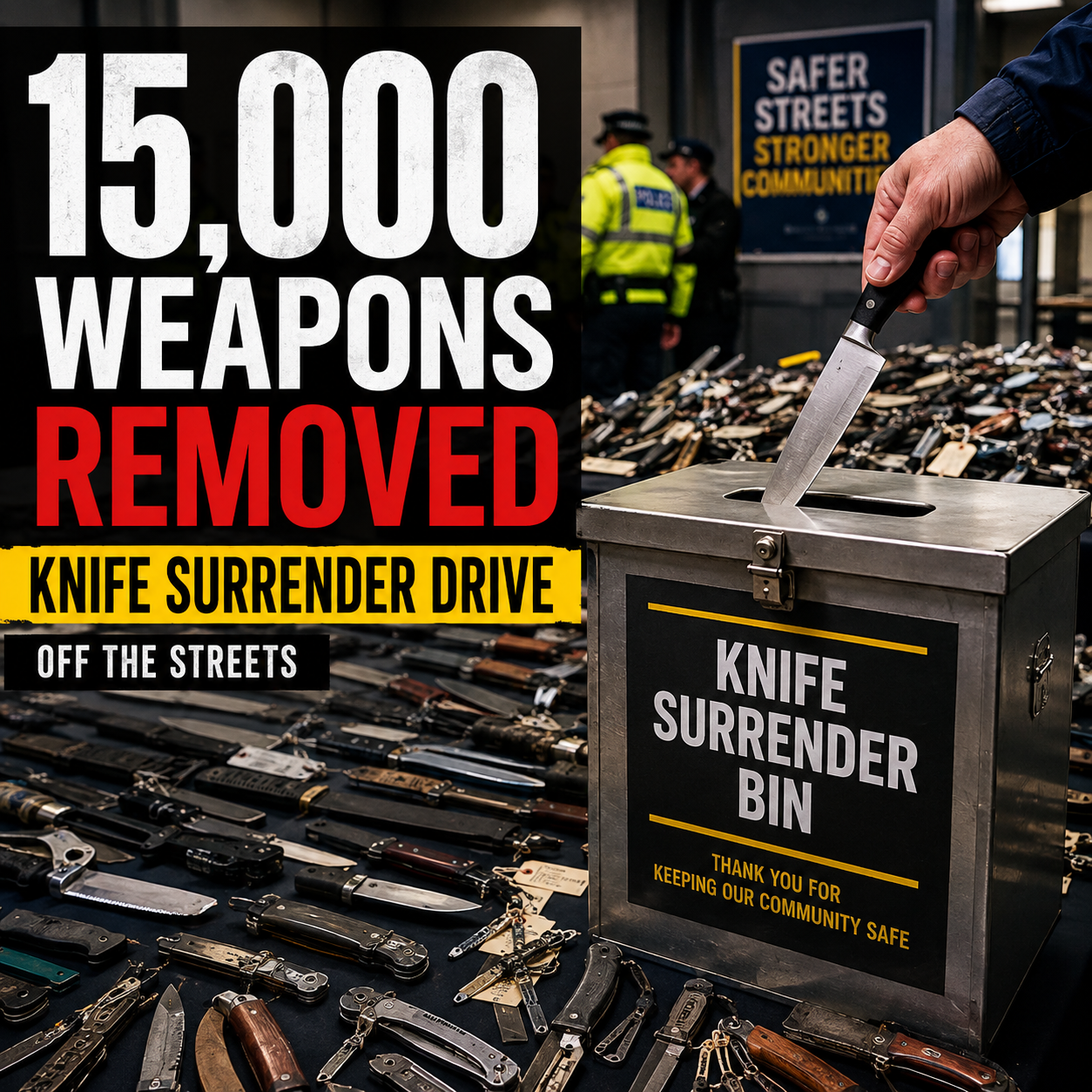
The Home Office says knife-related homicides have fallen to their lowest level in 35 years. It reports that knife-enabled homicides are down 26% and overall knife crime has fallen by 11% under the current government. More than 15,000 knives and offensive weapons have also been removed from circulation through surrender bins and a mobile surrender van.
Behind those figures is a broader policy question about prevention.
Weapon surrender schemes are not an alternative to policing, prosecution or sentencing. Instead, they provide a way for people to dispose of weapons anonymously before they become involved in criminal offending. The aim is straightforward: reduce the number of weapons in circulation and, in turn, reduce the risk of harm.
This reflects a wider challenge in knife crime policy. Criminal justice measures such as prosecutions and sentencing are important, but they typically operate after an offence has been committed. Surrender schemes are intended to intervene earlier by reducing opportunities for violence.
The government says there are now 45 surrender bins across England and Wales, including eight new locations. The programme works alongside police forces, local authorities and violence reduction partnerships. Additional bins are being introduced in South and West Yorkshire, while the FazAmnesty mobile surrender van will visit communities in the West Midlands and London.
For lawyers, several issues are worth watching.
First, the success of anonymous surrender depends on public confidence. People must trust that surrendering a weapon through the scheme will not automatically lead to criminal investigation. Without that confidence, participation is likely to be limited.
Secondly, there must be clear procedures for the collection, storage and destruction of surrendered weapons. These schemes depend not only on public trust but also on effective operational safeguards.
Thirdly, the scheme forms part of a wider legal response to knife crime. It now sits alongside Ronan’s Law, introduced following the death of 16-year-old Ronan Kanda, who was killed with a ninja sword purchased online. The legislation focuses on restricting access to dangerous weapons through tighter controls on sales and distribution. Surrender schemes address a different problem by removing weapons that are already in circulation.
The role of victims’ families should also not be overlooked. Many recent reforms have been influenced by campaigns led by relatives of those killed in knife attacks. Their efforts have helped shape public debate and draw attention to weaknesses in existing regulation.
There is a risk of overstating what surrender schemes can achieve. A knife handed into a surrender bin cannot be counted as a crime prevented, and crime trends are influenced by many different factors. However, reducing the number of weapons in circulation is a legitimate preventive objective and one element of a broader strategy to reduce violence.
Criminal law relies on policing, prosecution and punishment, but prevention also has a role. Measures that reduce risk before an offence occurs are an important part of any effective response to crime.
Knife surrender schemes are unlikely to solve the problem of knife crime on their own. Their value lies in providing a practical and accessible way to remove weapons from circulation and supporting a wider preventative approach.
A knife surrendered anonymously may never appear in a police investigation or court bundle. In policy terms, that is precisely the outcome the scheme is designed to achieve.
Author: Thomas Greatbanks
Leave a Reply