

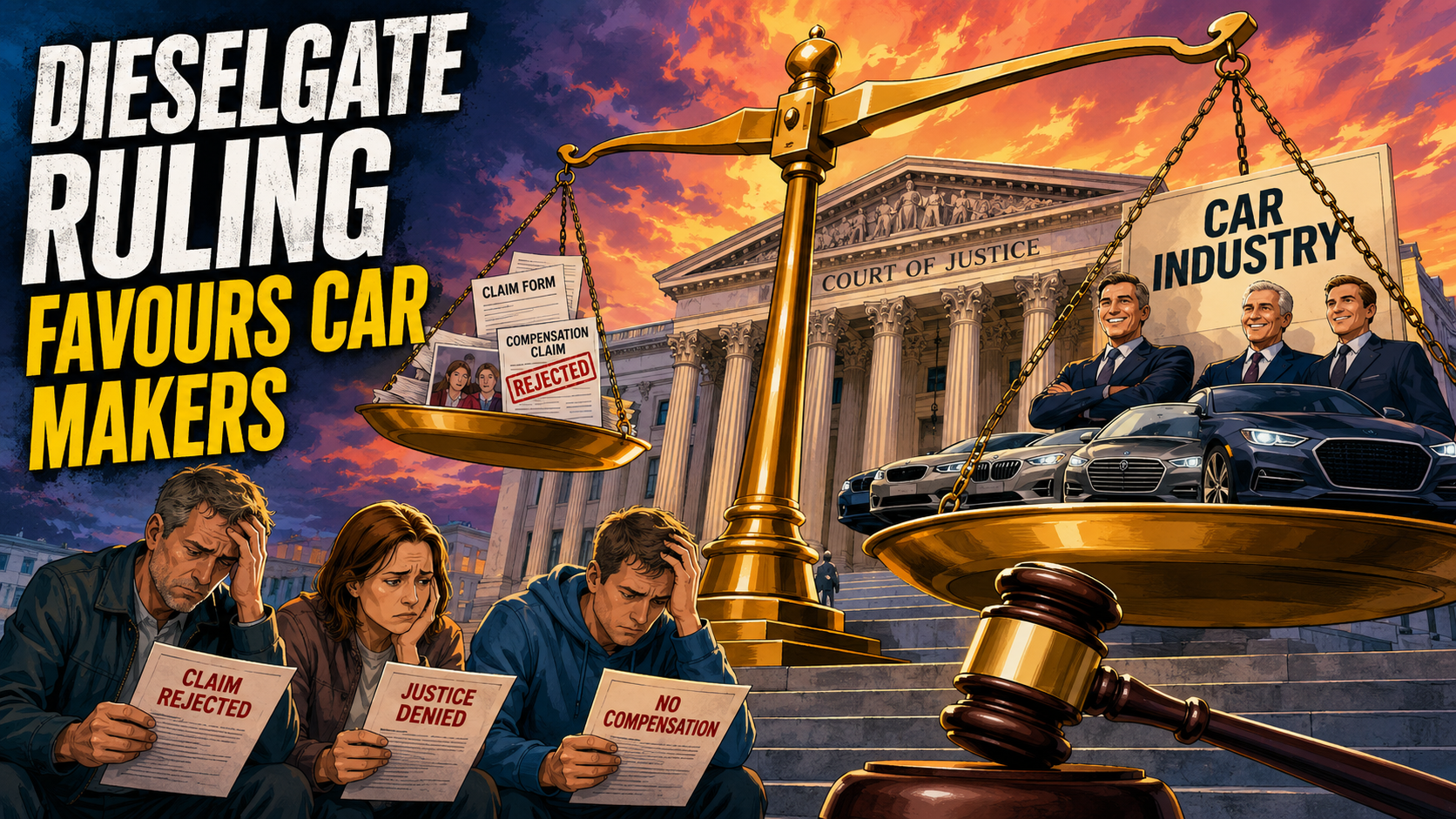
The High Court’s dieselgate ruling has largely gone the car makers’ way, which is bad news for claimant lawyers and good news for anyone who enjoys watching mass litigation refuse to die cleanly.
The Pan-NOx litigation concerns diesel vehicles produced from 2012 to 2017 by five manufacturers and whether they contained prohibited defeat devices. A defeat device is software or technology that affects emissions controls, often in ways that make a vehicle look cleaner during testing than it is in ordinary use. That is the plain-English version. The full version has enough engineering and regulatory detail to make a sane person stare at a wall.
The 13-week trial had to decide major liability issues. Reporting on 13 July said the ruling went largely in favour of car manufacturers, with claimant lawyers already saying there is a compelling case for appeal. That means the story is not over. Large group claims rarely end at first judgment. They molt.
For claimants, the problem was scale and proof. It is one thing to say dieselgate was a scandal. It is another to prove that specific vehicles, made by specific manufacturers, breached the relevant legal tests in a way that gives specific claimants a remedy. Courts are not sentimental. They want evidence, causation and statutory hooks.
For defendants, the ruling offers relief but not peace. Appeals may follow. Other brands, claims or issues may remain live. Even a successful defence can carry enormous legal cost, management distraction and reputational soot. Car makers have learned that emissions litigation is not merely about engines. It is about consumer trust, regulatory design and the promises made when technology is sold as clean.
The case has also had an impact on the group litigation market. Pan-NOx claims have been one of the largest consumer actions in England and Wales. They rely on claimant firms, funding, advertising, document platforms and the court’s ability to manage industrial quantities of allegations. A defeat or partial defeat does not only affect drivers. It affects funders’ appetites, law firm economics and future claims about environmental or product misconduct.
Mass claims are powerful because individual losses may be too small to fight alone. They are also risky because a big banner can hide difficult legal terrain. People sign up to campaigns expecting a simple scandal-to-cheque pipeline. The court often supplies a mountain path instead.
The legal market will now watch the appeal decision-making. If permission is sought, the next battle will be over whether the High Court got the law or evidence wrong, not whether diesel marketing made people cross.
Author: Thomas Greatbanks
Leave a Reply