


A 436-page privacy judgment has landed with the weight of a small sideboard and the mood of a teacher who has found glitter in the carpet – prove the case, do not ask the court to conduct an archaeological dig.
Mr Justice Nicklin handed down judgment on 7 July in Lawrence and others v Associated Newspapers [2026] EWHC 1637 (KB). Full judgment here. The claimants included Baroness Lawrence, Sir Elton John, David Furnish and Liz Hurley. They alleged unlawful information gathering and misuse of private information. Associated Newspapers denied liability.
The judgment is making waves because it draws a line which high-profile litigation often tries to smudge. The court is not there to investigate everything bad that may ever have happened in the general neighbourhood of a defendant. It decides pleaded claims, on evidence, against named parties, about specific acts.
And that is the spine of this judgment. The claimants had to prove their own allegations. Not the mood music, not the era, not the unpleasant smell of old Fleet Street cupboards. The actual pleaded acts.
Evidence of wider press culture may sometimes help. So may missing documents, third-party investigators, historic misconduct and the rest of the grubby furniture. But only if it helps prove the claim being tried. In plain English, the court will not rummage through the loft just because the loft looks suspicious.
For media lawyers, the judgment is as much a case-management manual as a privacy ruling. It deals with missing records, hearsay, witness memory, inference, third-party investigators and propensity evidence. These are dry words with sharp edges. They decide whether old allegations can survive when witnesses have aged, documents have vanished and everyone is trying to reconstruct the past from fragments and suspicion.
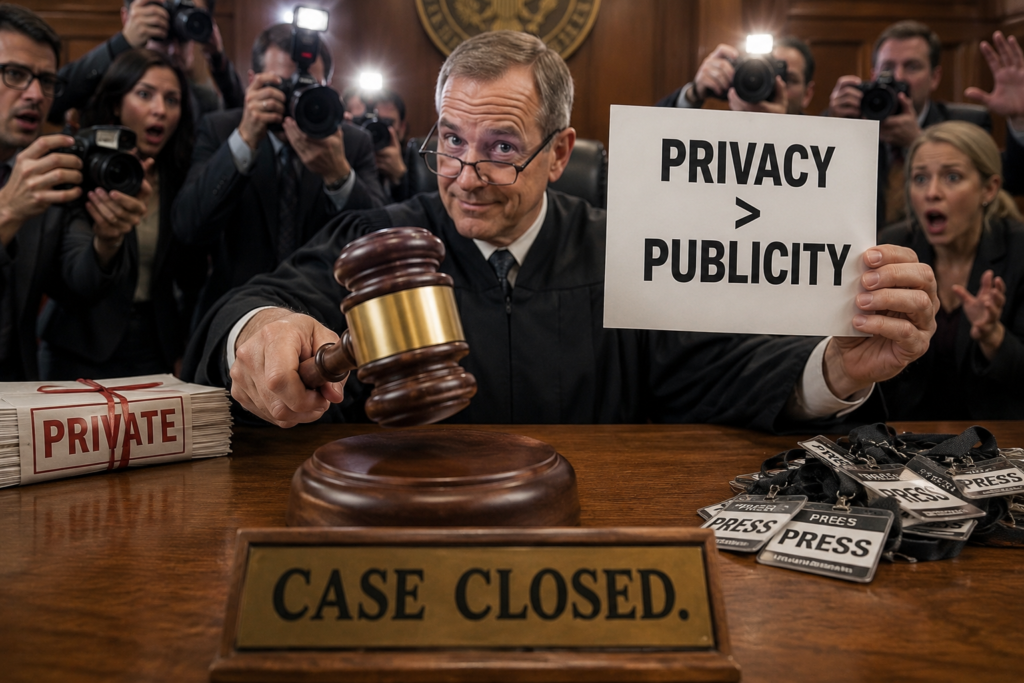
Historic media claims have a built-in problem. The alleged conduct may be decades old. The paperwork may be incomplete. The people involved may no longer remember, may remember badly, or may remember in ways that are a little too useful. The court may accept that parts of the newspaper industry once behaved appallingly and still insist on proof that a particular article, payment or intrusion came from a particular unlawful act.
That is not moral blindness. It is civil procedure. Suspicion, even wearing a very expensive coat, is not evidence.
Newspapers should not treat the judgment as a character reference. It is not one. The judgment sits against a long history of unlawful information gathering, private investigators and behaviour which gave privacy law much of its modern bite. Newspapers have spent years teaching judges to be suspicious. They should not look wounded when judges arrive with gloves on.
But suspicion does not reverse the burden of proof. That is the bit everyone dislikes until they are the defendant.
The wider lesson reaches well beyond newspapers. Group actions, historic abuse claims, data claims, reputation cases and consumer litigation all face the same temptation. Take a bad system, add sympathetic claimants, season with documents missing in mysterious circumstances, and ask the court to infer liability. Sometimes that will work. Often it will not.
The court’s answer is stubbornly lawyerly because courts are built that way. Show the link. Show the act. Show the loss. Then ask for judgment.
Privacy litigation has grown up. It is no longer only scandal management with famous names attached. It is forensic work: article by article, witness by witness, document by document.
Even famous claimants must bring proof, not atmosphere. Indignation may fill the room. It will not bridge the evidential gap.
Read the full judgment HERE.
Author: Marcelo Williams
Leave a Reply