

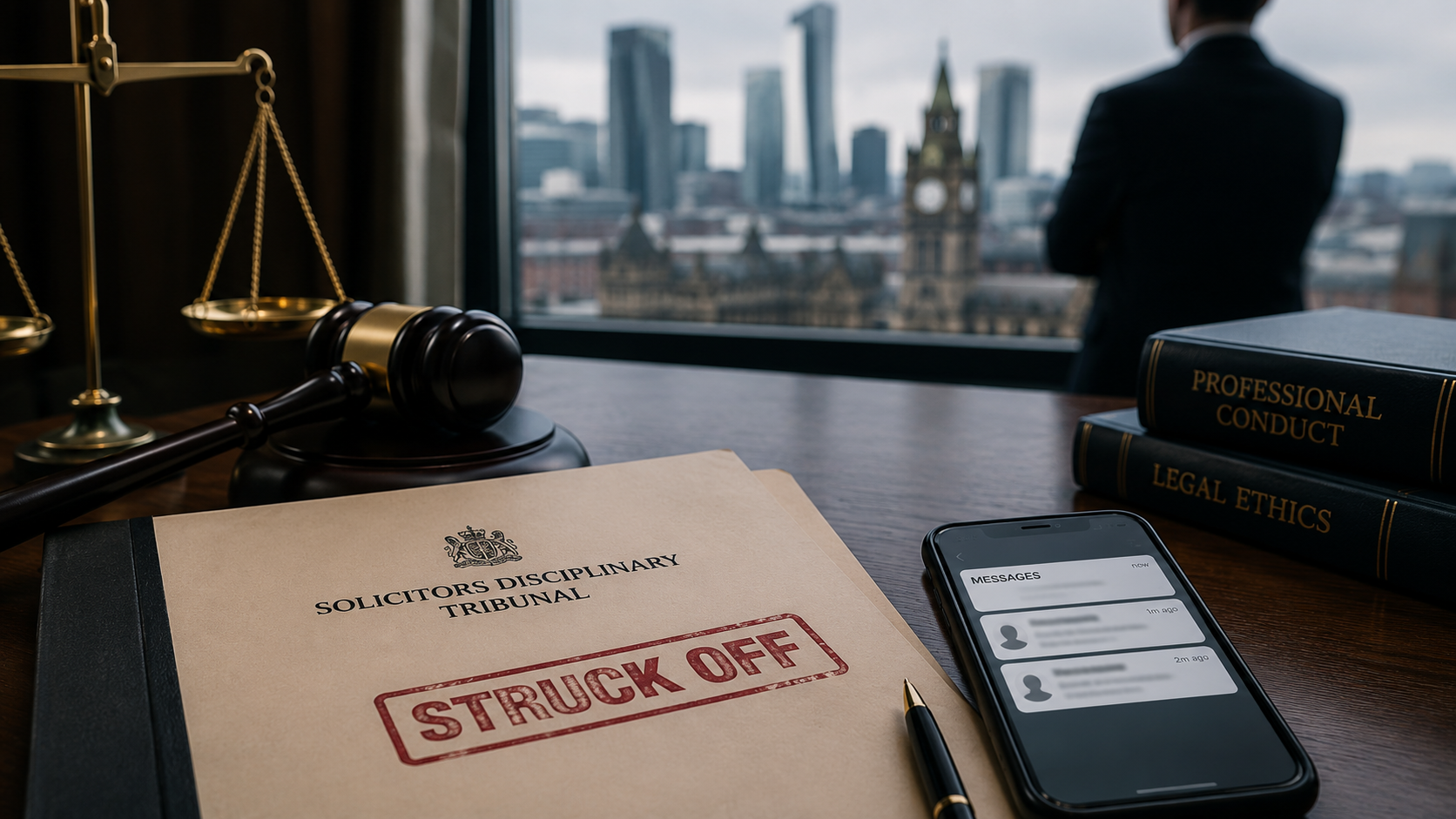
The SRA’s workplace misconduct drive has produced another hard lesson. Some messages are not just embarrassing, they are derailment.
A veteran Manchester solicitor, described in reports as a “top lawyer”, has been struck off after admitting unwanted messages to three women, including a barrister instructed by his firm. The SDT decision, reported on 7 July, places the case inside the profession’s wider reckoning with sexual misconduct, workplace power and the old habit of treating ugly behaviour as a private inconvenience.
Solicitors are regulated not only for the work they do on client files, but for conduct which affects public trust in the profession. That can include sexual misconduct, bullying, harassment and discriminatory behaviour. A solicitor does not escape regulation because the conduct arrived by message rather than in a court bundle.
being struck off means removal from the roll of solicitors. It is the professional buffers at the end of the line. A struck-off solicitor cannot practise unless restored, and restoration is difficult. The sanction is kept for conduct the tribunal considers fundamentally incompatible with remaining a solicitor.
The case matters because the profession is still adjusting to the regulator’s focus on workplace culture. For years, some firms treated senior lawyers’ behaviour as a management nuisance if the clients kept paying and the rankings stayed polished. That bargain is coming off the rails. Regulators now see internal culture as part of public confidence. Junior staff, barristers, consultants and instructed professionals are not scenery outside someone else’s carriage window.
There is also a power issue. Unwanted messages from a senior solicitor to women connected to professional work can carry pressure even where no explicit threat is made. Legal workplaces are hierarchical. Instructions, referrals, reputation and future work matter. The recipient may feel she has to manage the behaviour carefully because the sender holds status, money or influence. That is why regulators look beyond whether a message was technically sent after hours.
For firm, policies against harassment are useless if partners are treated like bad weather on the line – regrettable, familiar and nobody’s responsibility. Reporting channels must work for staff, barristers, consultants and anyone else dealing with the firm. A complaint system should not require the courage of someone stepping onto a live track.
The decision also shows that apology and embarrassment may not save a career where the misconduct strikes at integrity and trust. The profession can forgive some mistakes. It is less forgiving when a solicitor uses status like a badly maintained engine: noisy, entitled and dangerous to everyone nearby.
Clients are watching this too. Large organisations increasingly ask about culture, safeguarding and conduct when appointing lawyers. They do not want their matters handled by firms where junior staff are expected to absorb misconduct as part of the timetable. The legal market has discovered, rather late, that decency can be part of procurement.
Legal services are sold on judgment. A lawyer who cannot judge the line between professional contact and sexual pressure should not be surprised when the profession pulls the emergency brake for him.
The lesson for leaders is ordinary and severe: culture is evidenced by what happens after the complaint, not by what the website says before it.
Author: Marcelo Williams
Leave a Reply