

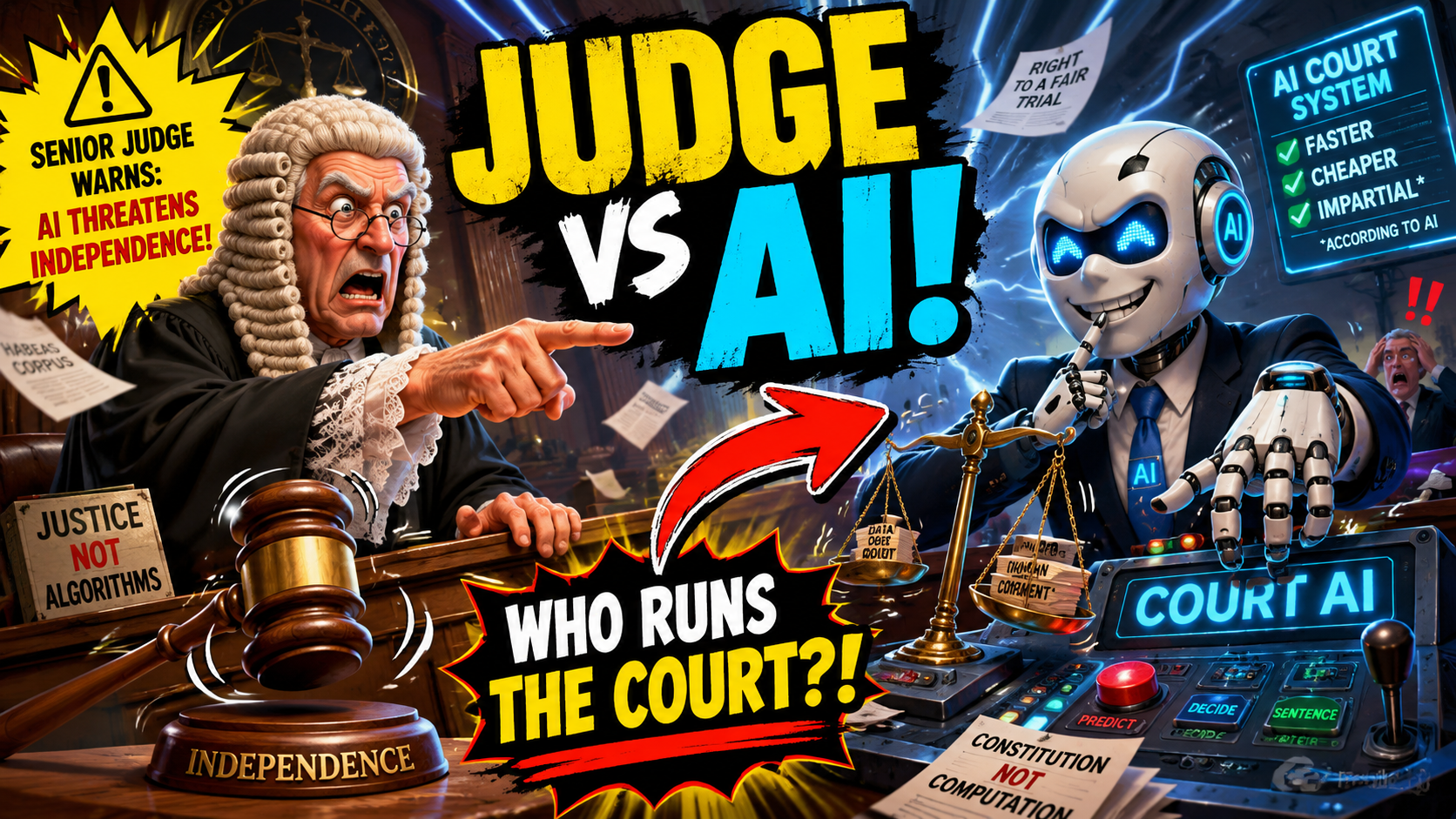
AI in the courts is not frightening because it is clever. It is frightening because it may be clever on someone else’s terms.
Dame Victoria Sharp, president of the King’s Bench Division, has warned that judicial independence could be compromised if courts become dependent on a small number of proprietary AI systems. Speaking at Inner Temple, she placed AI among the major risks facing the judiciary, alongside under-resourcing and the Crown Court caseload.
The warning is not the usual “robots replacing judges” pantomime. Nobody serious thinks the High Court is about to be staffed by a laptop in a tie. The issue is quieter and more dangerous. Judges may begin to depend on tools whose training data, updates, priorities and commercial incentives are controlled outside the judiciary. If a system shapes the answer before the judge has reasoned through the problem, independence has not vanished dramatically. It has been leased.
For readers new to the concept, judicial independence means judges decide cases according to law, free from improper pressure. That pressure can be political, personal or financial. Dame Victoria’s point is that it can also be technological. A system can nudge, rank, summarise and frame. It can make some authorities easier to see and others disappear into the digital shrubbery.
The warning lands after a run of cases involving fake legal authorities and lawyers using AI badly. Those are embarrassing, but they are also basic. The deeper question is procurement. What happens when the justice system buys tools from a handful of technology companies whose products are opaque, updated invisibly and optimised for aims the court did not choose?
There is a commercial angle for legal suppliers. Courts and firms will not reject AI. The pressure on cost, speed and backlog is too severe. Tools that summarise bundles, search authorities and manage documents will keep arriving. The winners will be providers that can show auditability, transparency, data security and human control. “Trust us, it’s smart” will not do. That line already belongs to estate agents and men selling watches outside stations.
For law firms, the speech is also a hint about future judicial expectations. If judges are worrying about hidden dependencies, they will expect lawyers to understand the systems they use. A solicitor who cannot explain how a draft, chronology or research note was produced may find professional judgment treated as missing in action.
The access-to-justice promise remains real. AI could help litigants understand procedure and reduce cost. Badly governed AI could produce a faster version of unfairness.
The court system needs tools. It does not need a new master with cleaner fonts.
That creates a procurement problem with constitutional edges. Courts will need to know who trains the system, who can change it, where the data sits and whether outputs can be challenged. A human judge can give reasons. A vendor model may give a confident paragraph and a licence agreement. One of those is justice. The other is software sales with robes nearby and procurement forms firmly attached.
Author: TOF
Leave a Reply