

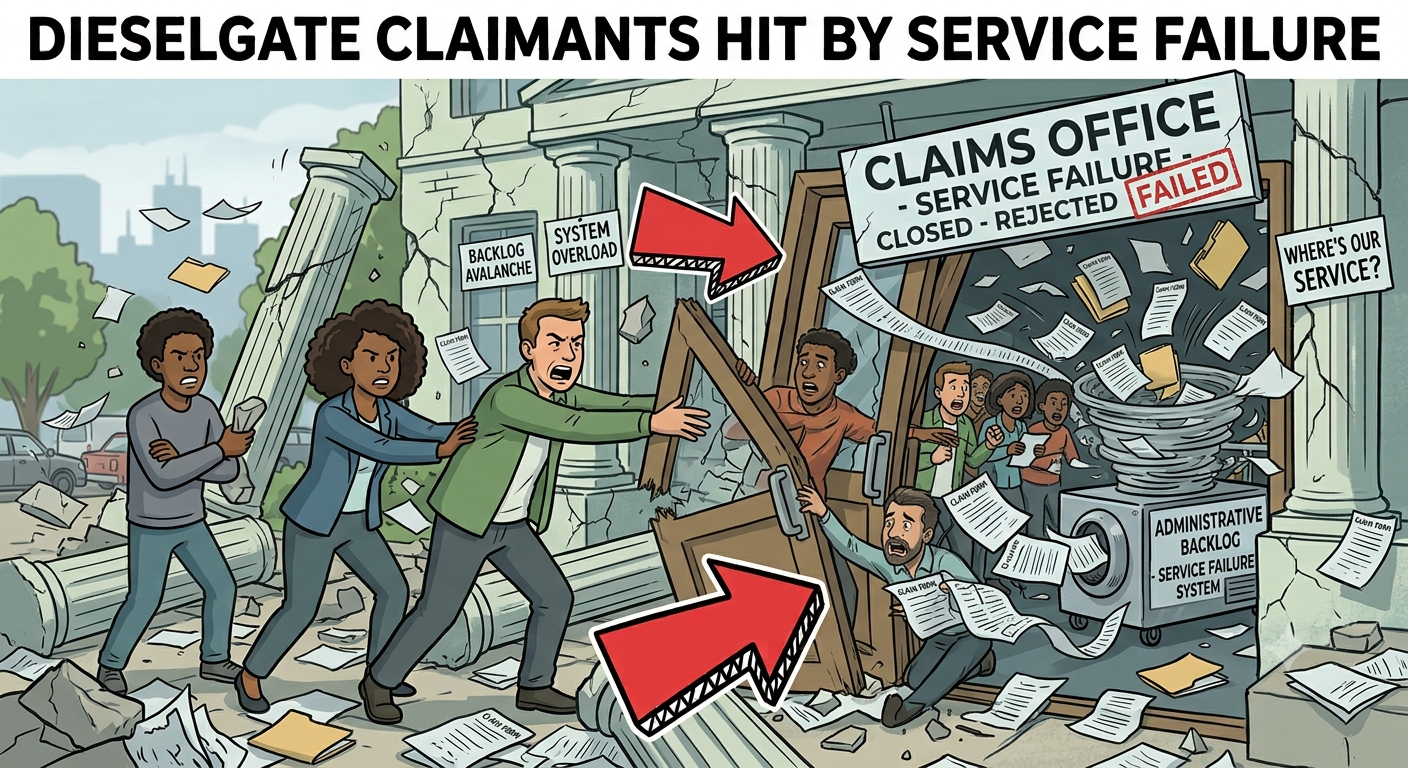
Five thousand Dieselgate claimants have run into the least glamorous wall in civil litigation: effective service.
A High Court master has refused to let the claimants join the Peugeot, Citroen and DS part of the Pan-NOx emissions litigation after their law firm failed to serve the claim form before the cut-off date. The solicitors then sought relief from sanctions after what the court described as an extraordinary delay. The claimants’ side says the cases remain live, but the ruling is a heavy procedural blow.
A claim form is the document that starts a civil claim. Service is the formal act of getting it to the defendant in the legally required way and in time. To non-lawyers this sounds like envelope worship. In group litigation it is more like passport control. Miss the gate and the aircraft does not wait because your holiday had “moral force”.
The group litigation order required claims to be issued and served by 4pm on 15 December 2024, with a short adjustment for court delays where forms were sealed later. The 5,000 claimants were represented by Liverpool firm Bingham Long and wanted to be added to the group register. The defendants resisted. Senior Master Cook accepted that allowing late entry would prejudice the orderly conduct of the proceedings.
That phrase matters. Group litigation works by discipline. The court corrals thousands of similar claims into a managed process, chooses sample cases, sets trial stages and keeps the herd from trampling the judge’s room. The liability trial has already concluded. A quantum trial, dealing with value if liability is established, is listed for October. Letting thousands of late claimants join after the register closed could disturb sample selection and invite other late applicants to try the same door.
The human side is rough. Dieselgate claimants are consumers, not litigation technicians. They may assume signing up with a firm means their claim is safe. That is why professional negligence claims tend to sprout around missed limitation and service deadlines like damp in a basement flat.
For claimant firms, the ruling is a warning about volume work. Mass claims promise scale. Scale can also produce industrial-scale mistakes. A firm may have slick onboarding, clever adverts and rows of digital dashboards. None of it helps if the claim form is not served when the court order says it must be served.
For defendants, the decision strengthens the value of hard procedural boundaries. Group litigation is expensive enough without a constantly reopening guest list.
Civil procedure is often accused of being dry. It is. So is gunpowder, until someone drops a match.
There is another point for firms selling group claims to the public. Advertising often makes litigation sound like joining a queue for compensation. The court sees something more exacting: pleadings, registers, deadlines, sample claims and prejudice to defendants. Once consumers are gathered in their thousands, the solicitor’s job becomes logistics with legal consequences. Bad logistics can kill good claims.
Author: Marcello Williams
Leave a Reply