


FCA Pure Protection Market Study (MS24/1.5),
More than half of UK adults have no life insurance, no critical illness cover, and no income protection. Most of them have never even weighed it up.
That is the finding behind a new push from the Financial Conduct Authority, published this week, to close what it calls a serious gap in financial security. According to the FCA’s research, 58% of adults have none of the three main types of protection insurance, and 59% of that group has never given the question any real thought. Protection insurance pays out, or replaces lost income, if you die, become seriously ill, or can no longer work. It is distinct from home, car or travel cover, and often the last thing anyone budgets for until they need it.
Rather than writing new rules, the FCA is assembling a coalition. The Money and Pensions Service and the Digital Property Market Steering Group will prompt people to think about protection at moments when it is most relevant: becoming a parent, buying a first home, signing a tenancy. The Protection Distributors’ Group will run a consumer awareness campaign aimed at groups least likely to take out cover. The Association of Mortgage Intermediaries will train advisers to raise the subject properly with clients, rather than treating it as an afterthought to a mortgage sale.
The groups the FCA is most worried about will be familiar to anyone who has tried to buy protection insurance while self-employed, renting, or managing a health condition: renters, gig economy workers, people on lower incomes, and those with pre-existing medical conditions. These are exactly the customers the market has historically found hardest, or least profitable, to serve well.
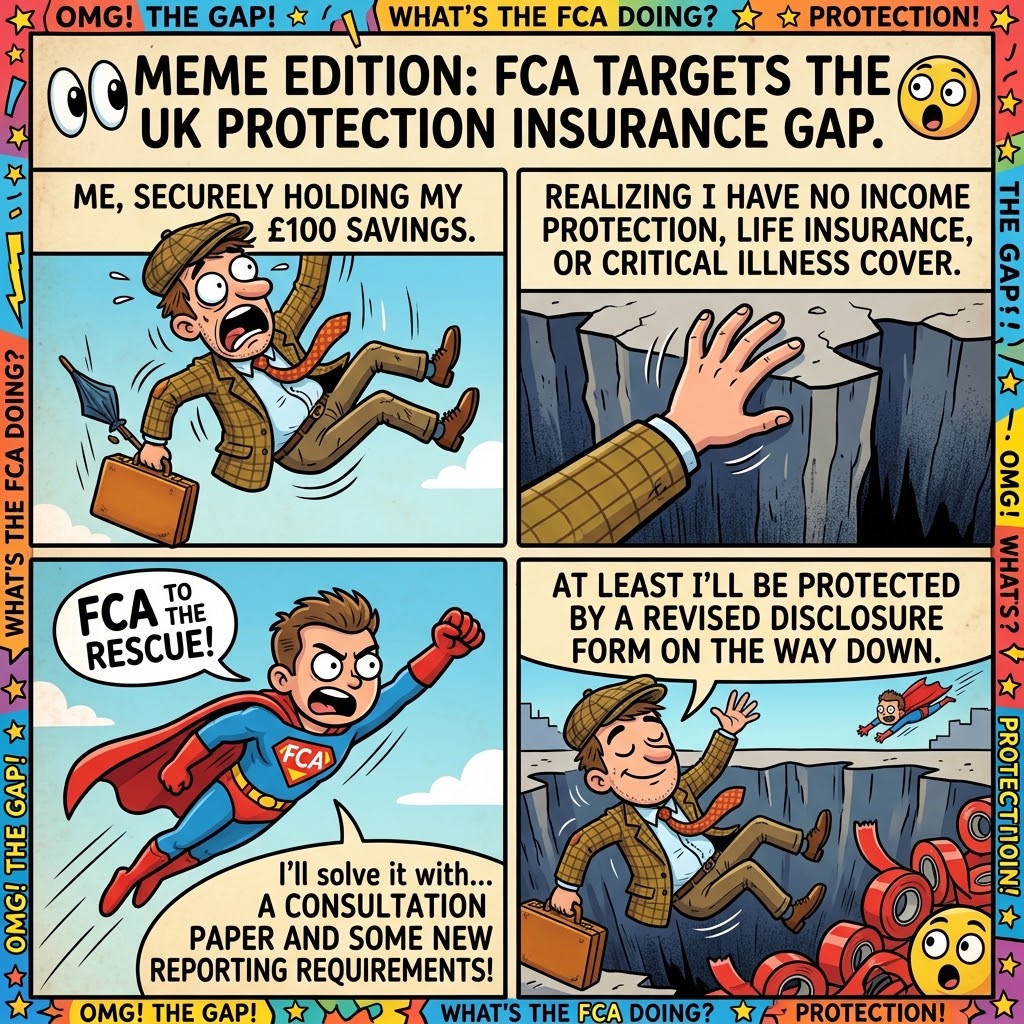
For lawyers and compliance teams advising insurers and advisers, the real substance sits under the headline initiative. The work follows the FCA’s Pure Protection Market Study, and alongside the new coalition, the regulator has published findings on switching, claims handling and fair value across the market. Its verdict: competition generally works well for people who already hold cover, but firms need reminding of their obligations under the Consumer Duty and product governance rules. Consumer Duty requires firms to actively deliver good outcomes for customers, not simply avoid causing harm, a standard the FCA is signalling it will hold protection insurers to more visibly. It says it is not planning new market-wide measures for now, but will “take action where firms fall short.”
There is also an invitation for anyone building insurtech products: the FCA wants firms to join a TechSprint aimed at innovation in this market, with expressions of interest due by 13 November, and it will run a webinar to clear up misunderstandings about what its rules actually require. Separately, it is working with the Association of British Insurers to cut delays in obtaining medical records, one of the more mundane reasons protection claims and applications drag on for months and put people off applying in the first place.
Consumer Duty means firms can no longer simply wait for customers to ask about protection. Under the FCA’s new approach, if you don’t ask, the industry is now expected to ask you.
Author: Eric Sinclair
Leave a Reply