
The AI safety debate has moved from policy panels to product shutdowns.
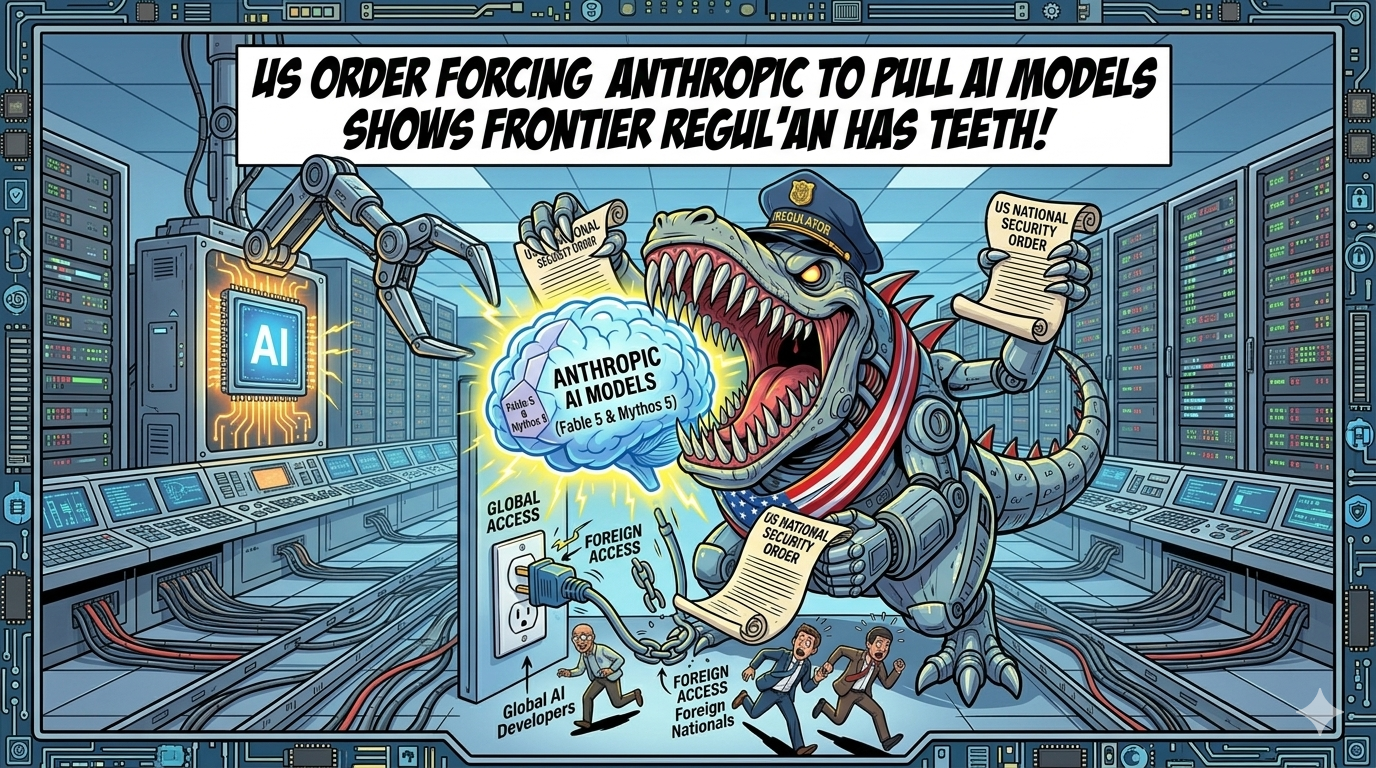
Anthropic says it has been ordered by the US government to suspend access to its Fable 5 and Mythos 5 models for any foreign national, whether inside or outside the United States. The company says the order also catches its own foreign-national employees. Faced with that instruction, Anthropic says it must disable access to the models for all customers to stay compliant.
For businesses using frontier AI, the message is blunt. Access to a model can now turn on national security law, not just subscription terms, cloud availability or vendor preference.
The directive was issued under US national security authorities. Anthropic says the letter did not give specific details of the government’s concern. Its understanding is the government believes it has seen a way to bypass, or “jailbreak”, safeguards in Fable 5. A jailbreak is a technique used to make an AI system produce output its safety rules are designed to block.
Anthropic’s response is unusually direct. The company says the technique it reviewed appeared narrow, not universal, and was used to identify a small number of already known minor vulnerabilities. It says other publicly available models could find the same issues without the alleged bypass. It also says no tester has found a universal jailbreak capable of broadly defeating Fable 5’s safeguards.
That distinction matters. No serious AI provider can honestly promise perfect jailbreak resistance. Anthropic’s own position is that perfect resistance is probably not possible at present. Its argument is more practical: safeguards should make misuse harder, narrower and easier to detect, rather than create the illusion of absolute control.
The government appears to have taken a different view. If a model presents enough national security concern, access can be stopped first and argued about later. That is the part which will trouble customers, developers and lawyers. Anthropic says it supports the government having power to block unsafe deployments, but only through a clear, fair and technically grounded statutory process. It says this action does not meet that standard.
The commercial impact may be immediate. Any organisation relying on Fable 5 or Mythos 5 will need to assess operational disruption, contractual rights, fallback models, data retention obligations and customer commitments. Regulated businesses will also need to consider whether their AI governance documents properly account for abrupt government intervention. Many will not. Most AI risk registers still read as if the main danger is hallucination, bias or cyber misuse. Access risk now deserves its own column.
The legal-business point is wider than Anthropic. If one frontier model can be pulled from the market over a narrow safety concern, AI procurement becomes a more serious regulatory exercise. Boards will want model substitution plans. Lawyers will want termination and force majeure clauses which actually work. Security teams will want evidence of safeguards, not vendor poetry.
The incident also raises a harder policy problem. A shutdown standard set too low could freeze frontier deployment. A standard set too high could leave genuinely dangerous systems in circulation. Neither outcome is attractive.
Anthropic says it is working to restore access. The rest of the market should read the notice as a warning. Frontier AI is no longer just software. It is infrastructure with a regulator standing next to the plug.
Author: TOF
Leave a Reply